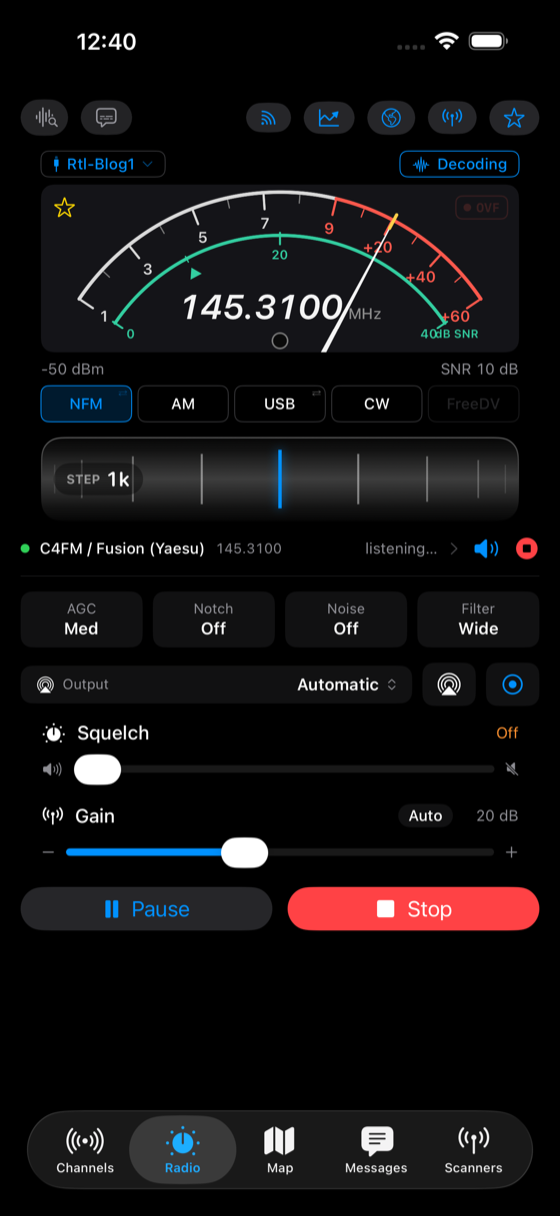
Above 50 MHz the action is local and digital. Airwave Scan scans a whole band at once, decodes DMR, Fusion and D-STAR to voice, finds the nets that are actually running, and tells you when a satellite is about to clear the horizon.

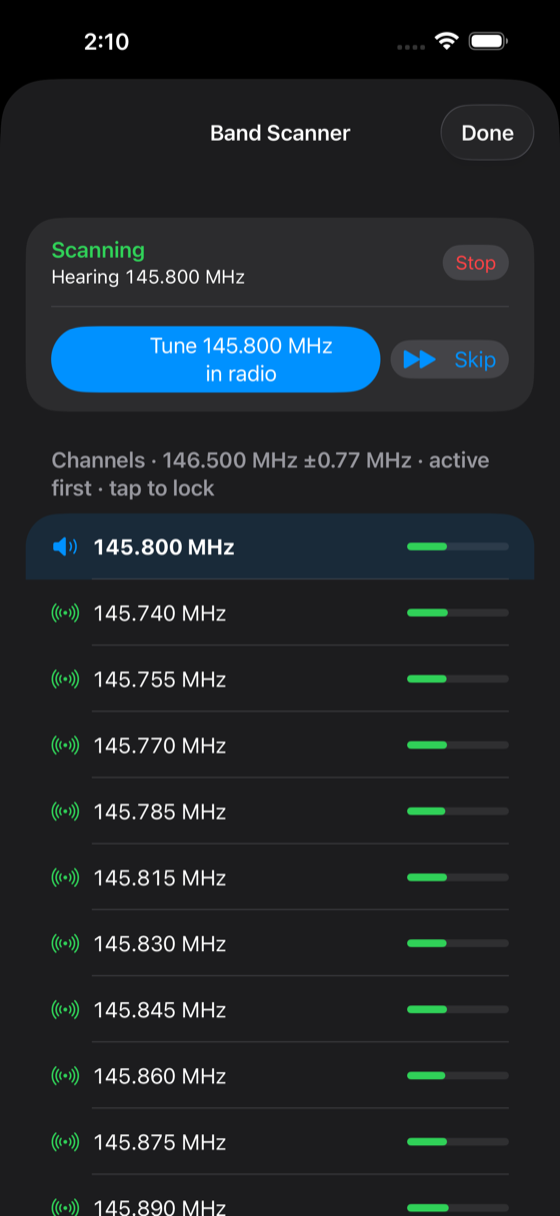
A multi-channel scanner watches every carrier in a band from one dongle and drops you onto the active one — no round-robin dwell, no missed calls.

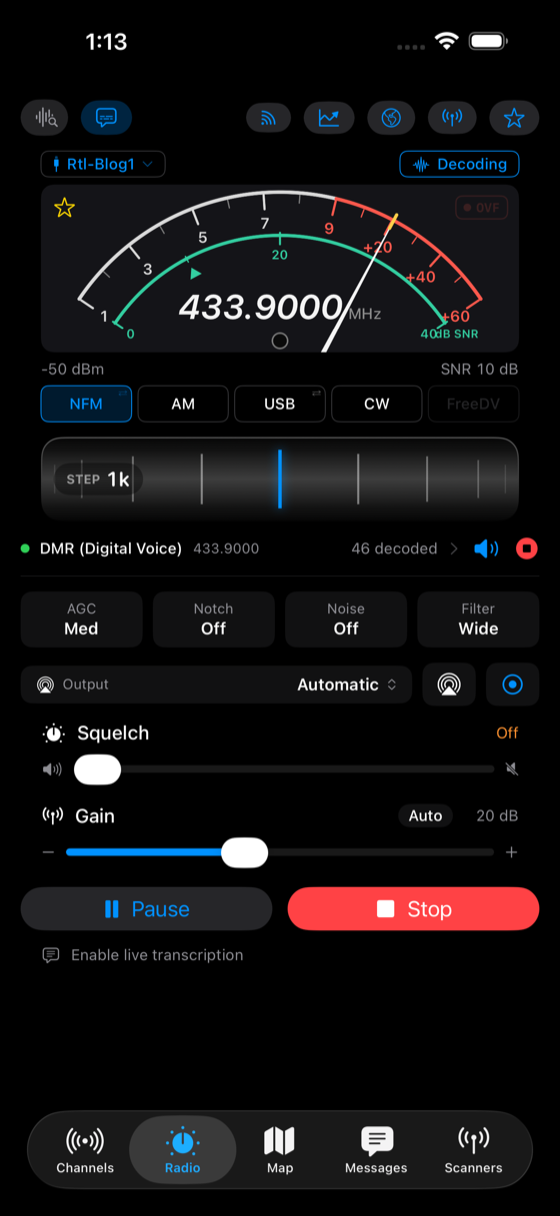
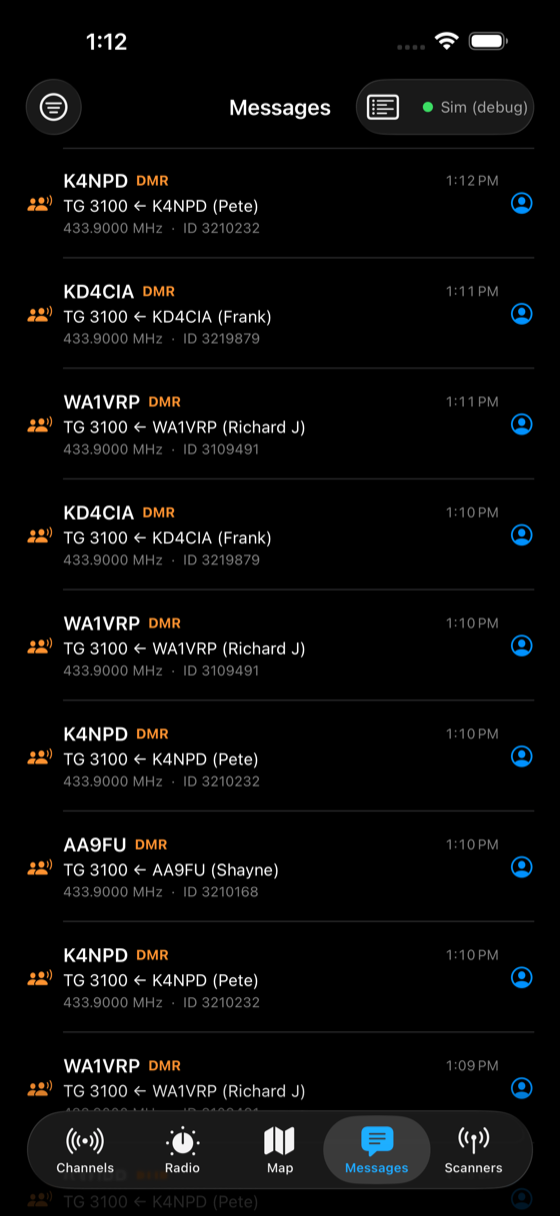
Tune a digital repeater or hotspot and pick the mode — the Pi decodes the vocoder to plain audio in real time, streams the voice to your phone, and pulls the callsign, name, talkgroup and colour code out of the data stream, threading each over into your feed.
Decoded on the dial — DMR voice live off a hotspot on 433.9
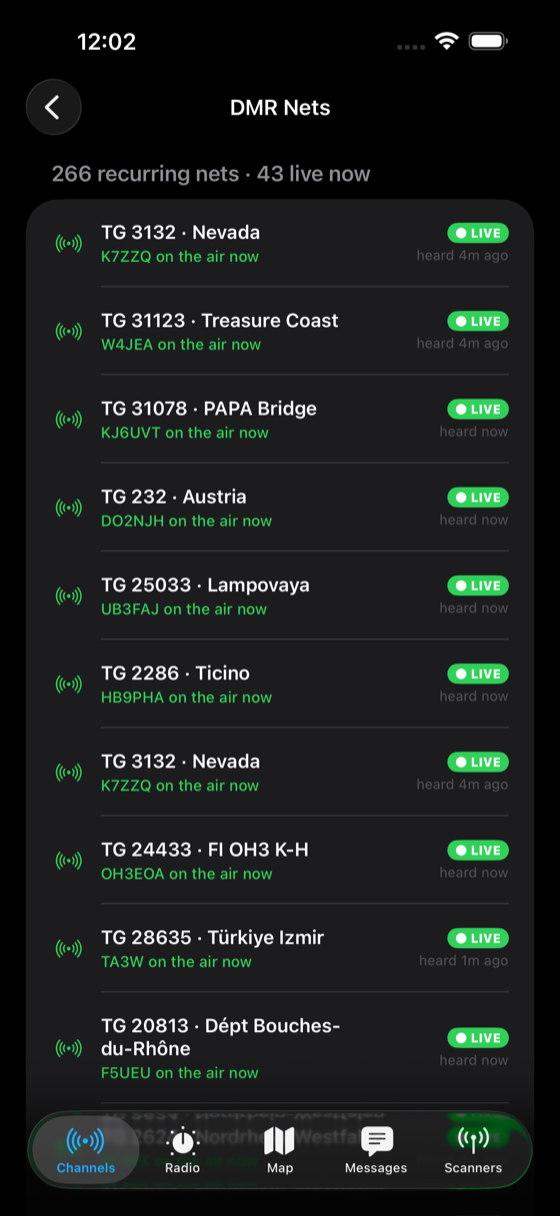
Airwave Scan mines BrandMeister to learn which talkgroups host recurring nets and when — then watches them live, so a scheduled slot only lights up when someone is really keyed up.

Tap a net and the app uses your BrandMeister SelfCare key to switch the linked talkgroup on your hotspot remotely, over the internet, on the right timeslot. Your hotspot then puts that traffic on its RF output, and the Pi's DMR decoder listens there in promiscuous mode — decoding whatever's on that slot and talkgroup to voice. Tune away and it unlinks, leaving your hotspot's own static talkgroups untouched.
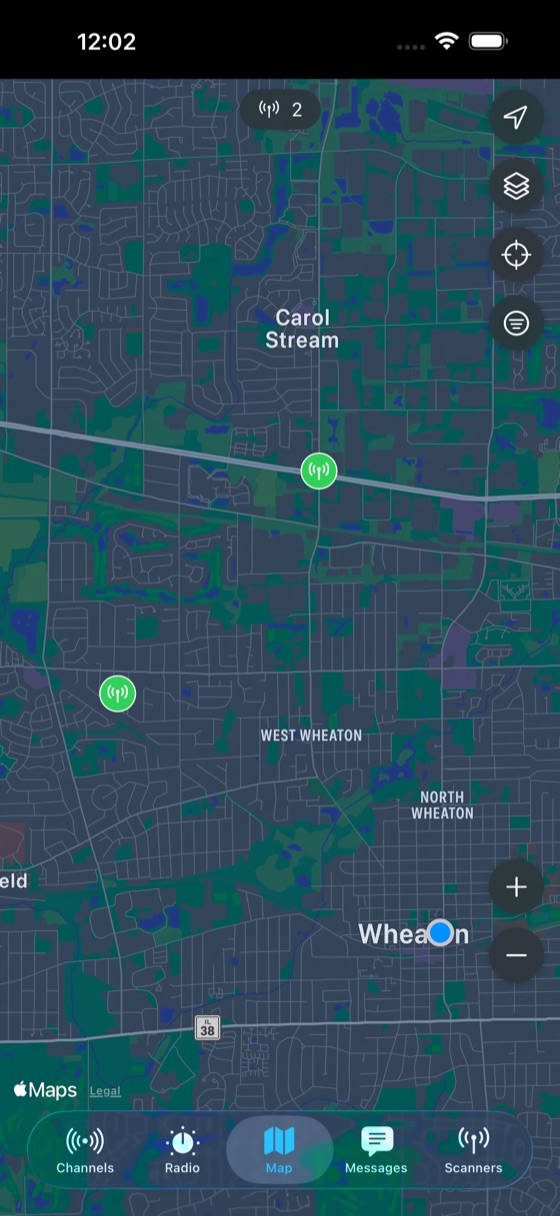
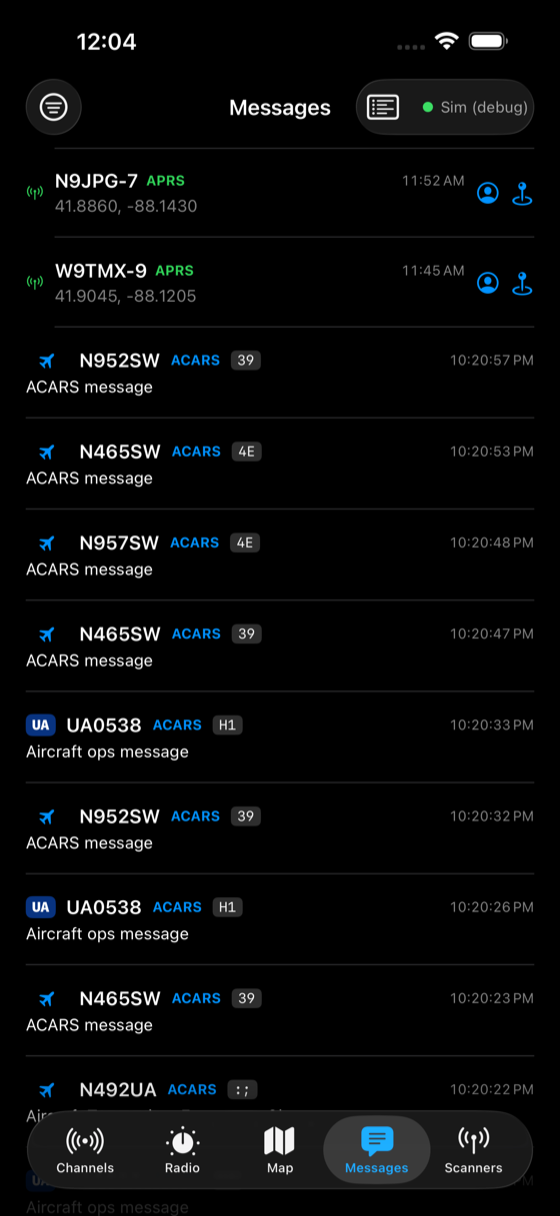
Decode the 2 m packet network and watch stations move in real time — including the mobile format most trackers actually send.
On the map — decoded APRS stations, street level
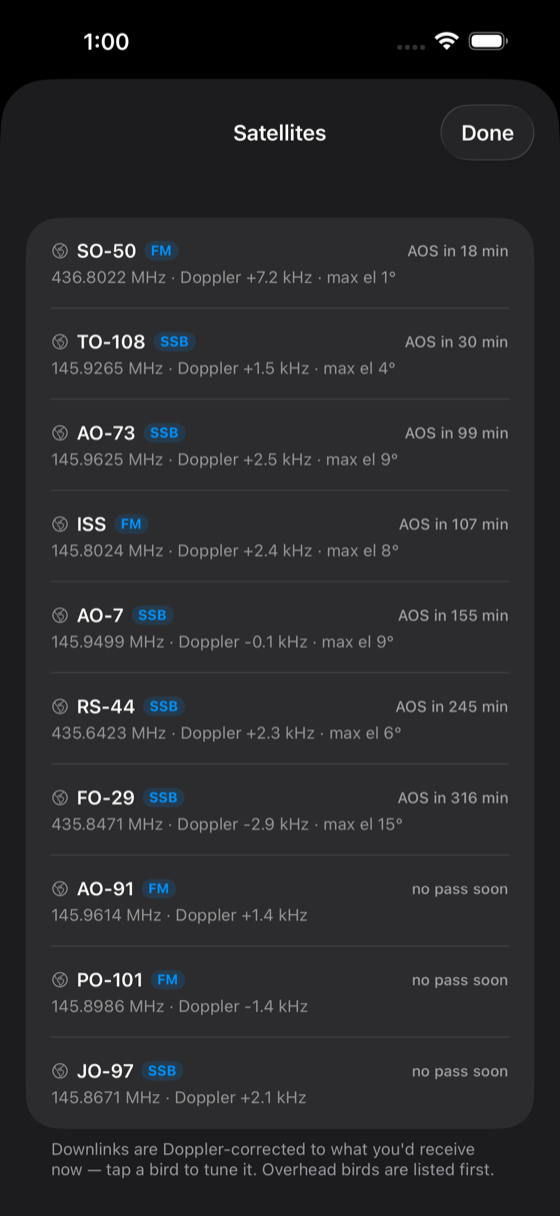
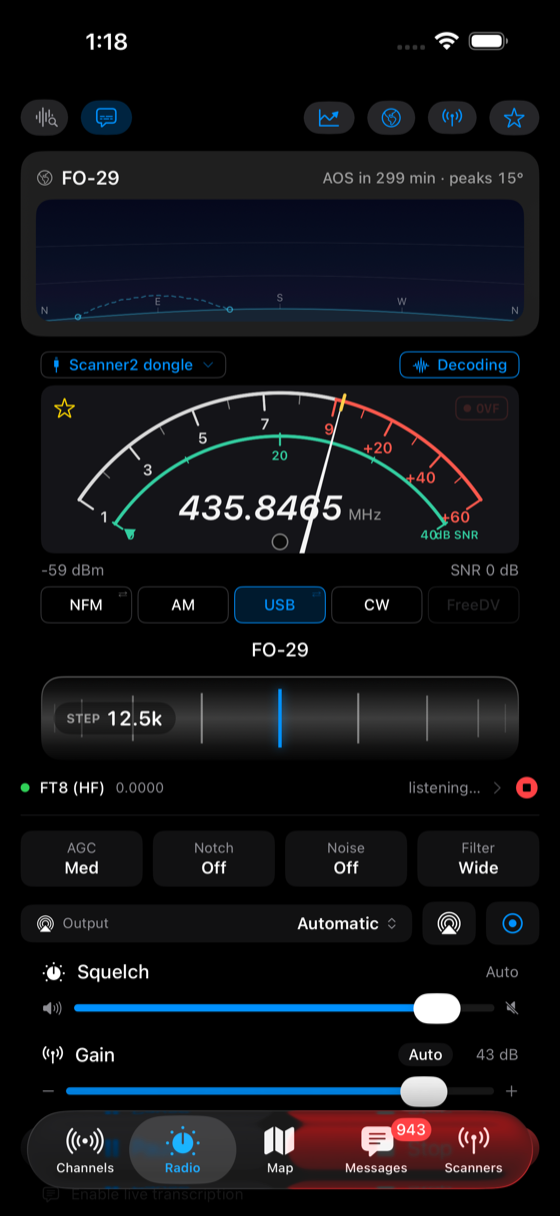
The Pi runs the orbital math, so you get a real countdown, a live sky picture, and a receiver that chases the Doppler for you.
The pass — countdown, sky track & Doppler
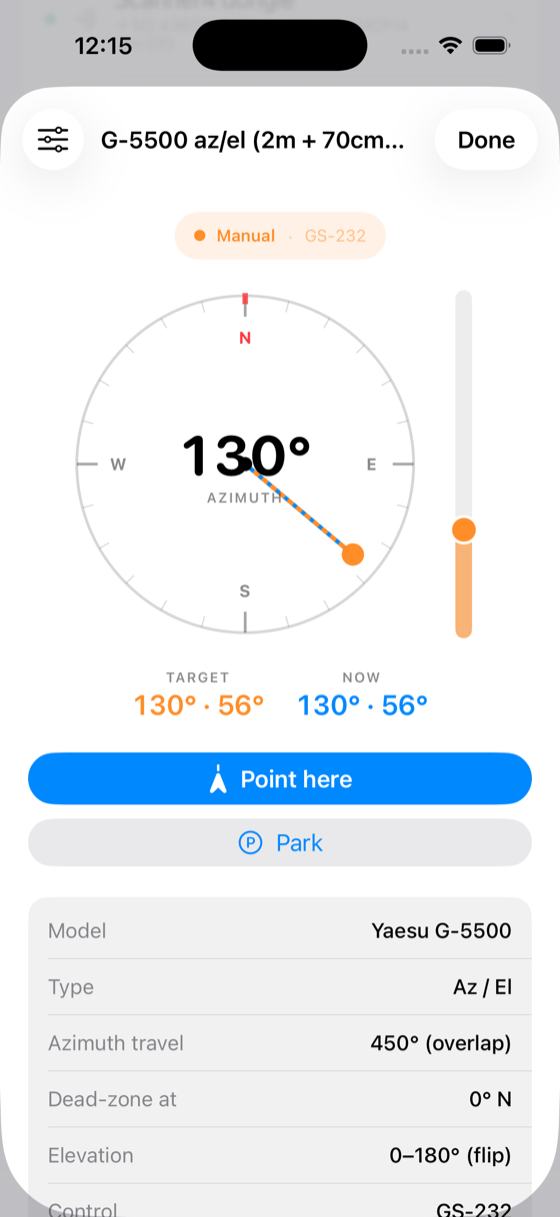
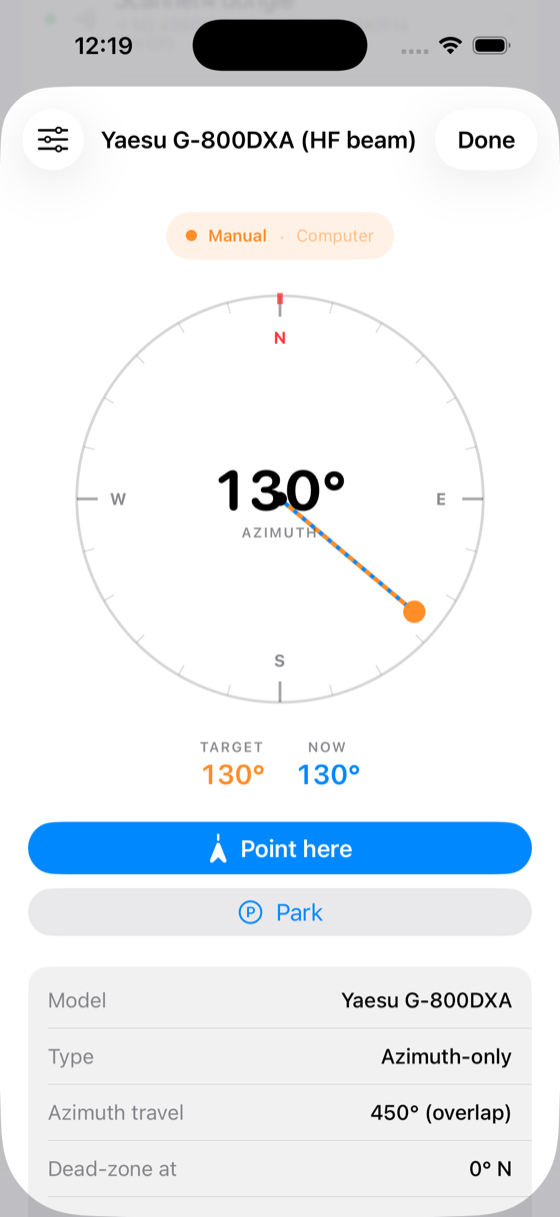
Wire an az/el (or azimuth-only) rotator to the Pi through a GS-232 controller like the LVB Tracker, and the app steers your high-gain antennas across the pass while it tunes the downlink — using each rotor's real travel, not hard-coded limits.
Az/el, steered live — a G-5500 pointed to 130° and 56° up over GS-232
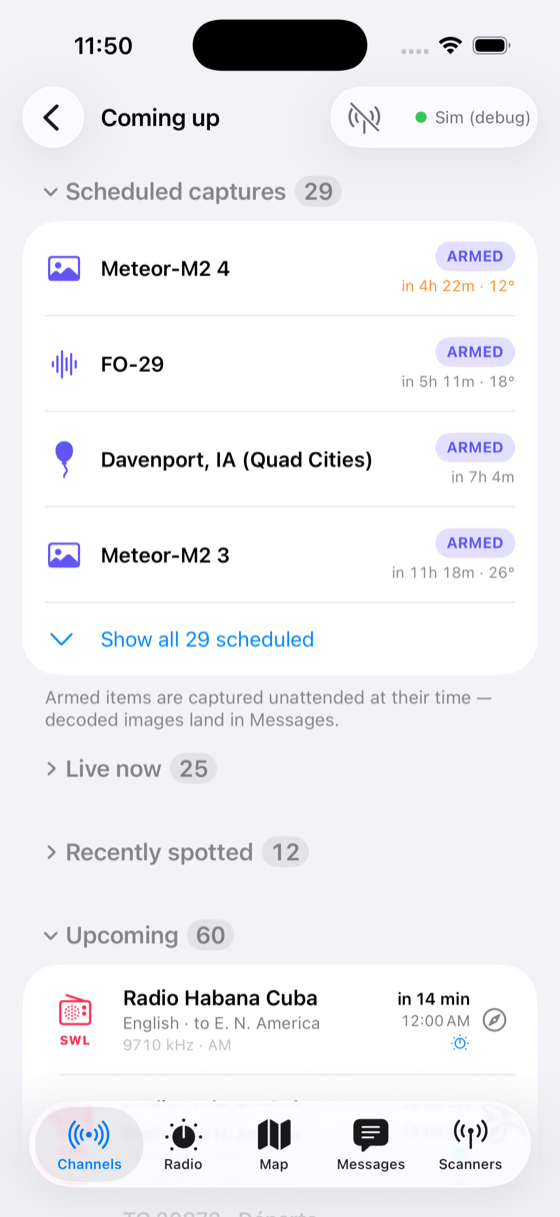
The station is a radio DVR. Point it at anything in the agenda — a satellite pass, a weather-fax chart, a balloon launch — and the Pi wakes at the scheduled time, captures it on its own, and drops the result in your Messages feed. You don't have to be home, or awake.

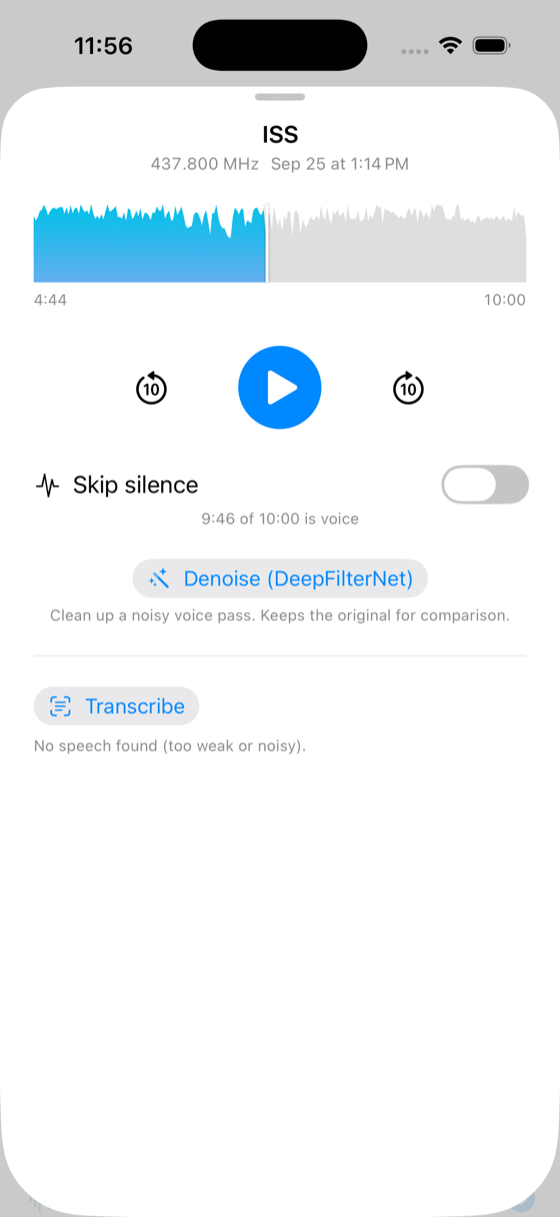
When the Pi records a voice pass — the ISS repeater, an FM bird, or any frequency you point it at — it lands in Messages as a clip you can work with, not just a file on a card.

The band scanner runs a wide FFT across an entire VHF/UHF band and hears every channel at once — so a call on an idle repeater doesn't slip past while you're parked on another.
Point a VHF/UHF dongle at your favorite bands, add a hotspot for the digital nets, and let the scanner and the net finder keep watch.