Activities
Amateur Radio · HF

The low bands,
decoded and mapped.

From a quiet 40 m evening to a 10 m opening, Airwave Scan turns your Pi into an HF weak-signal station you run from the couch or the car — the modes decoded on-device, the propagation read out in plain English, and every spot plotted.

FT8 · FT4 · JS8 WSPR · Q65 · JT65 CW · RTTY · PSK31 SSTV · slow-scan
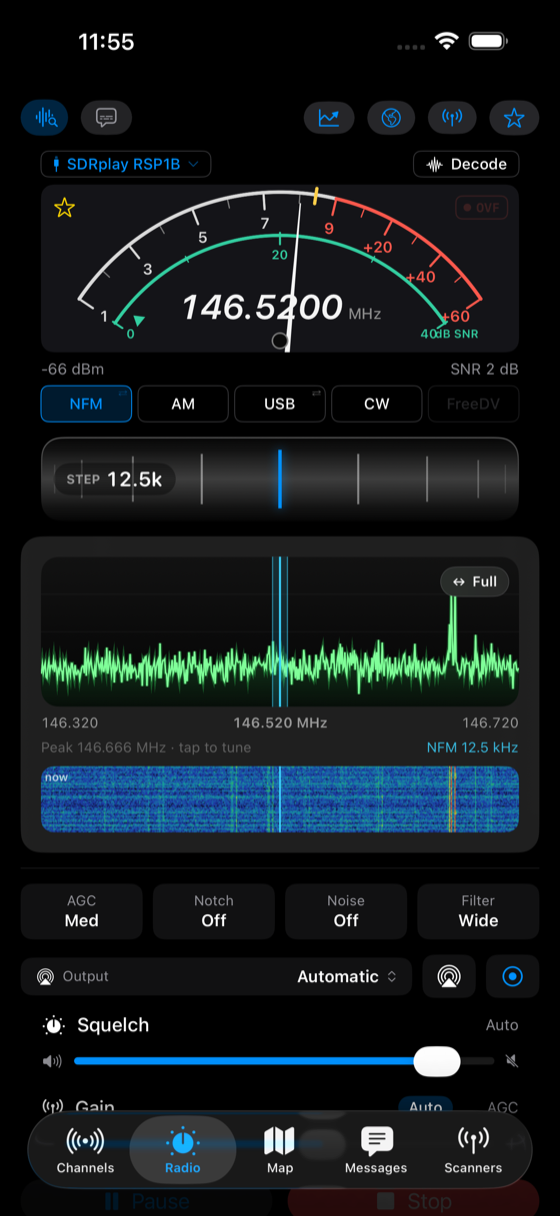
The Radio tab receiving on HF with a live spectrum and waterfall
Weak-signal & digital modes

The whole JT/FT stack, decoded on the Pi

The same open-source engines the modes were built on run right on the edge box, so decodes appear the instant a cycle completes — no laptop, no soundcard cables.

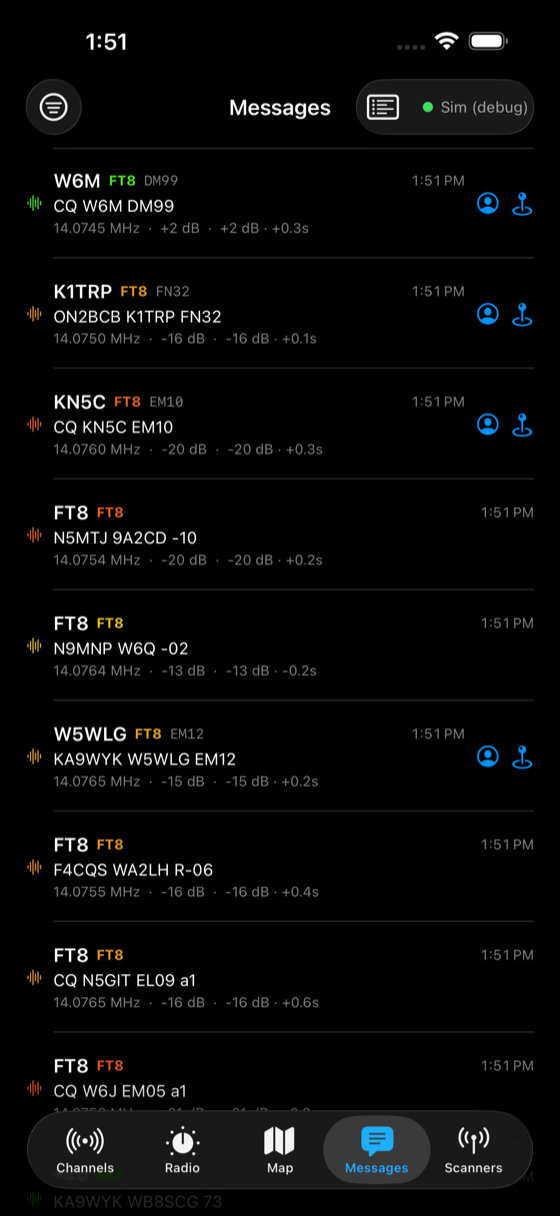
  • FT8, FT4, JS8, MSK144, Q65, JT65 & WSPR — slotted decodes with SNR, grid and distance.
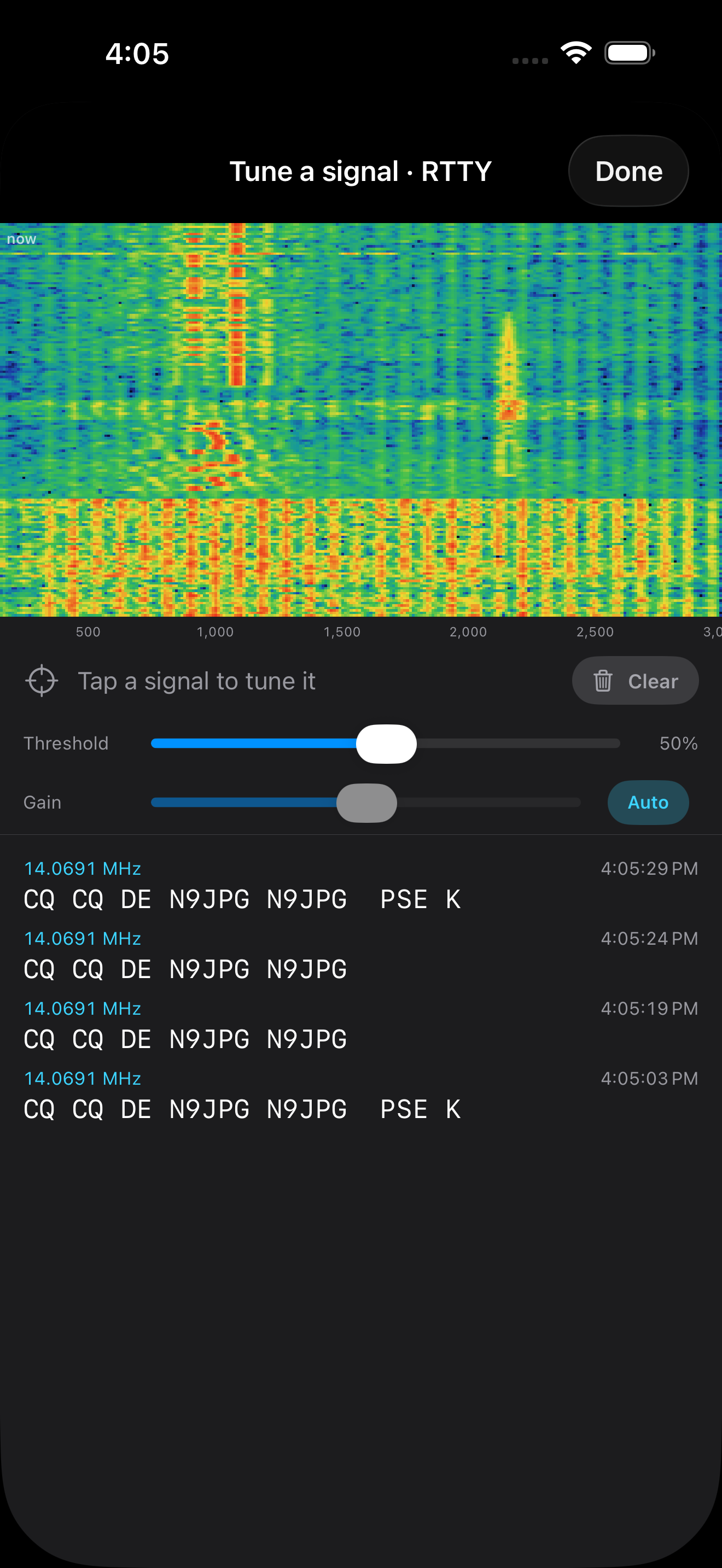
  • Channelized CW, RTTY & PSK31 — many signals across the passband decoded at once, each its own live thread.
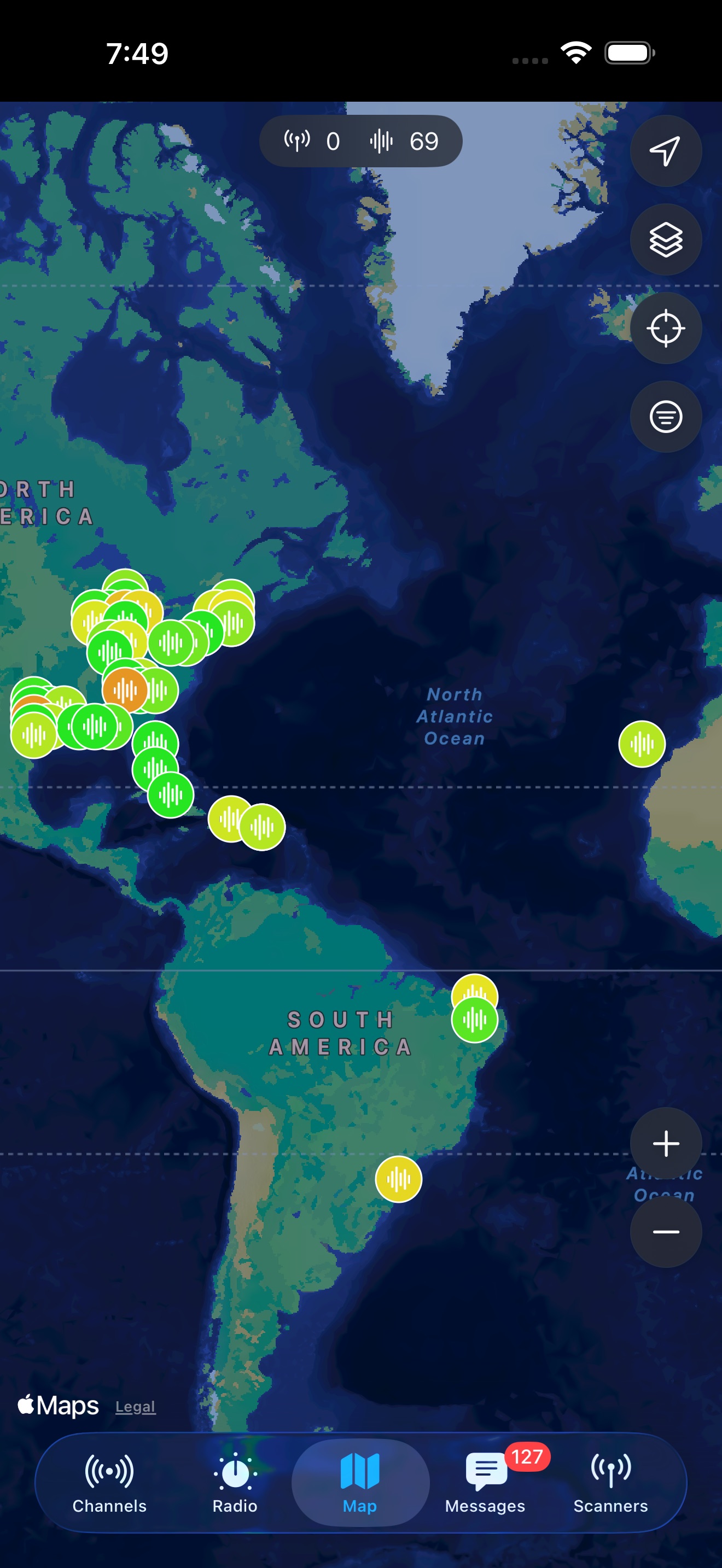
  • Every decode lands twice — in the unified feed and pinned on the map by grid square.
Live FT8 decode feed on 20 m — callsigns, grids, SNR, and DX from Belize, Russia and American Samoa
Tune a signal

Pick one signal out of the pile-up — and read it

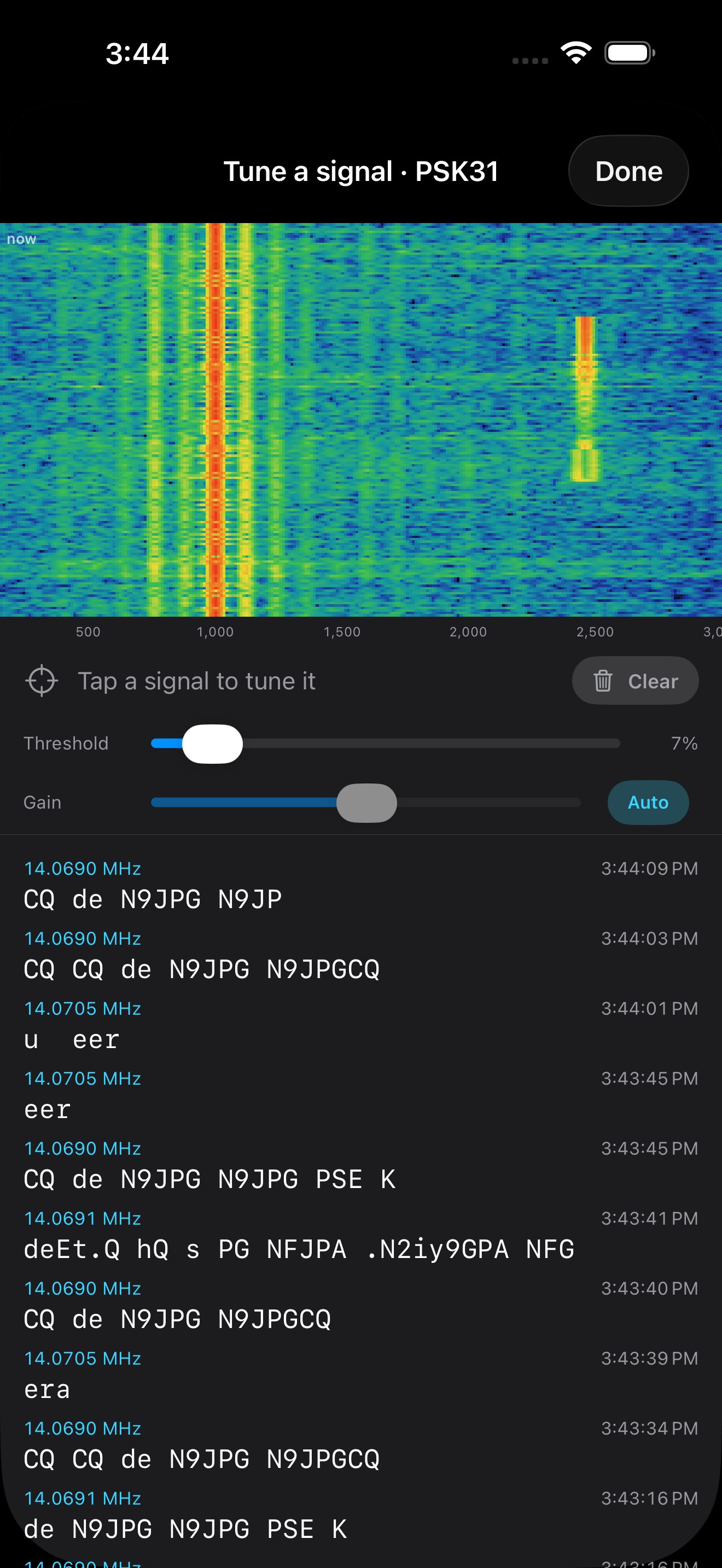
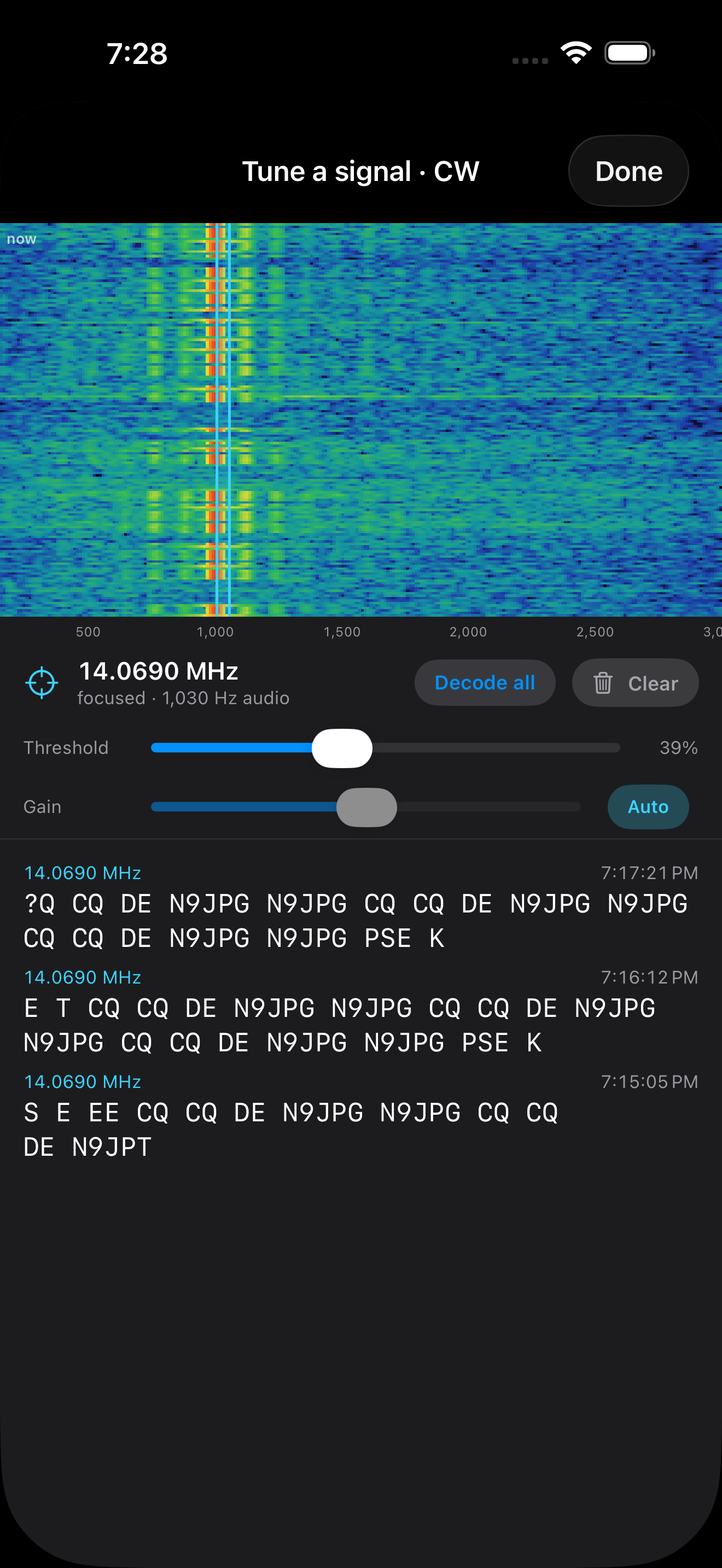
The keyboard modes decode channelized — every signal in the passband at once — but tap any trace on the live decode waterfall to focus one and read just its copy, with the receiver gain and squelch right there under your thumb.

  • Tap-to-tune waterfall — a rolling spectrogram of the decode passband; pick the exact signal to isolate.
  • Gain & threshold on the screen — drop the gain on a hot local signal, open the squelch for weak DX, no Pi access.
  • Clean, live copy — each over threaded in at its true frequency as it's sent.
Propagation

Which bands are open, in plain English

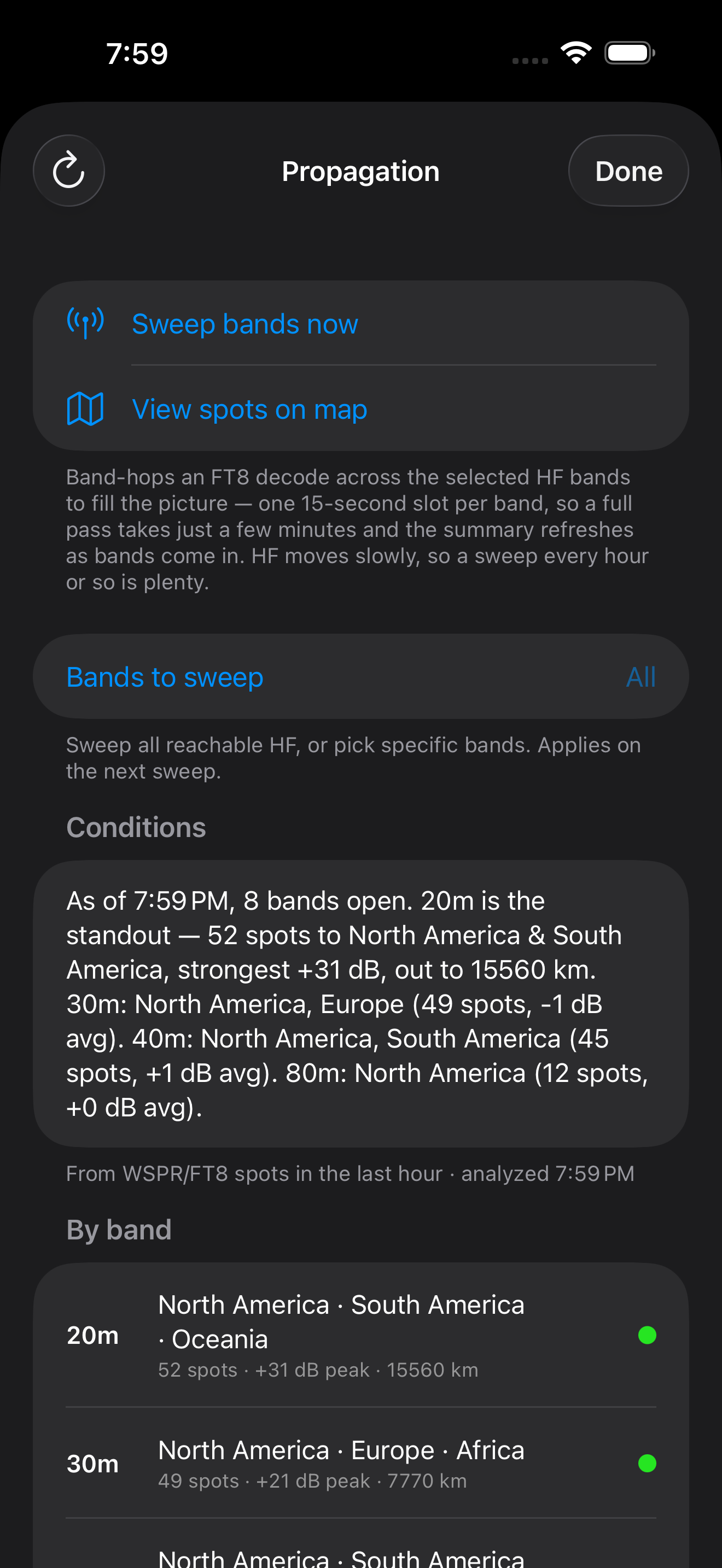
One tap runs an FT8 sweep across the HF bands and turns thousands of decodes into a sentence — then keeps the map and agenda honest about what's actually workable.

  • Plain-English conditions — "20 m and 17 m wide open to Europe; 10 m marginal."
  • Workable-band bars — ranked by how much you're hearing, cross-checked with live DX cluster spots.
  • "Workable HF only" filter — hide agenda items on bands the beacons say are dead.
A real receiver

Software VFO, waterfall, and clean audio

Tune the analog bands like a modern rig: a software VFO that slides inside the captured window with no dial-wedge, a live spectrum-and-waterfall panadapter, and the filters that pull a weak SSB or CW signal out of the noise.

  • Every normal mode — USB, LSB, CW & AM — SSB voice for nets and rag-chews, CW for the code, AM for shortwave broadcasters and utility stations; plus wide "hi-fi" eSSB.
  • Adjustable filters, AGC & squelch — tighten the passband around a signal in the noise.
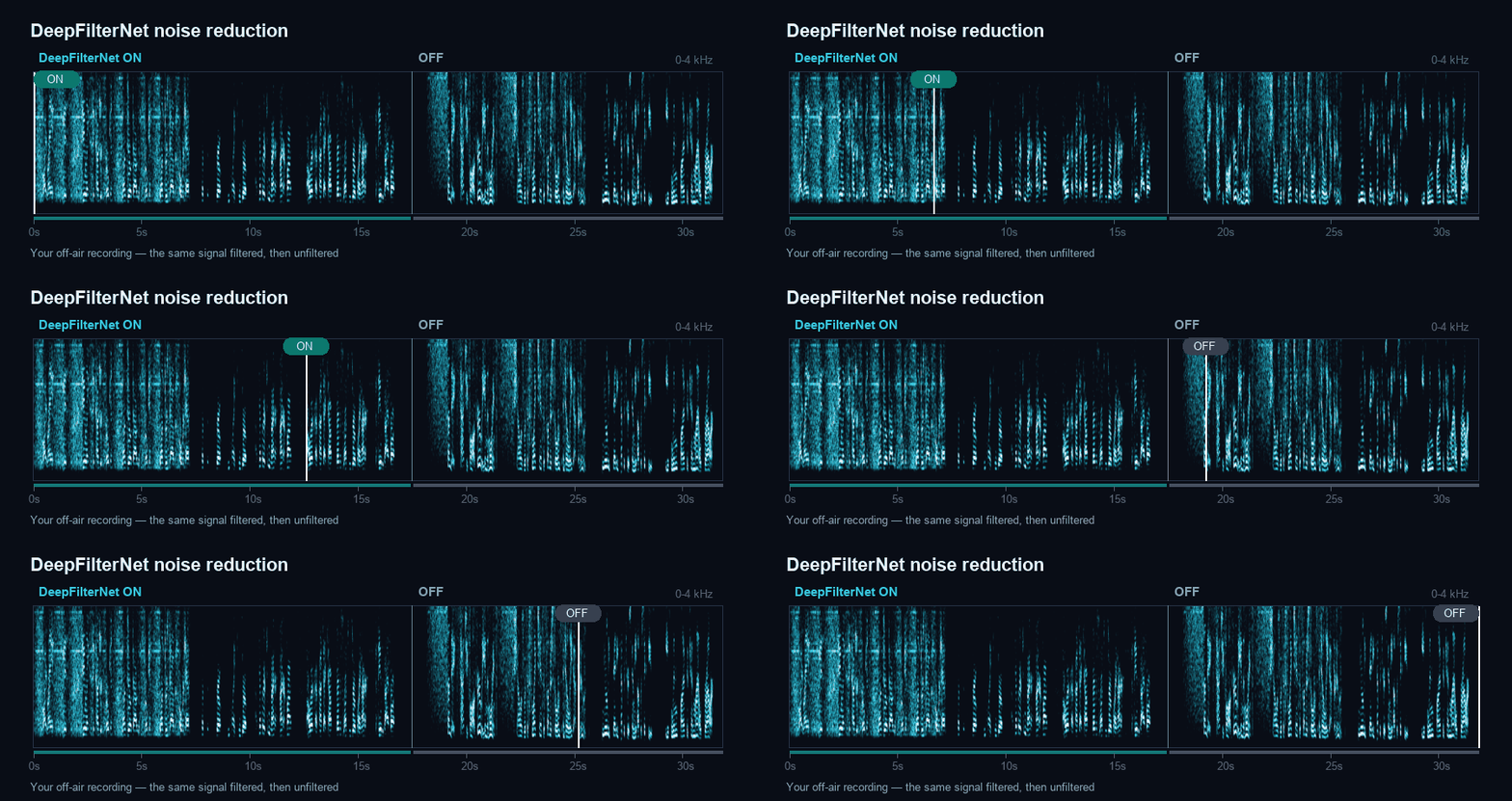
  • Noise reduction suite — spectral, RNNoise, DeepFilterNet and libSpecBleach, plus a noise blanker, with a live strength slider.
DeepFilterNet turning on — the AM hiss drops away while the air-band voice stays clear
Hear the difference — off-air air-band audio with DeepFilterNet toggled on and off, two passes back to back, recorded live on the Pi.
Spot it, log it, chase it

From "heard it" to "worked it"

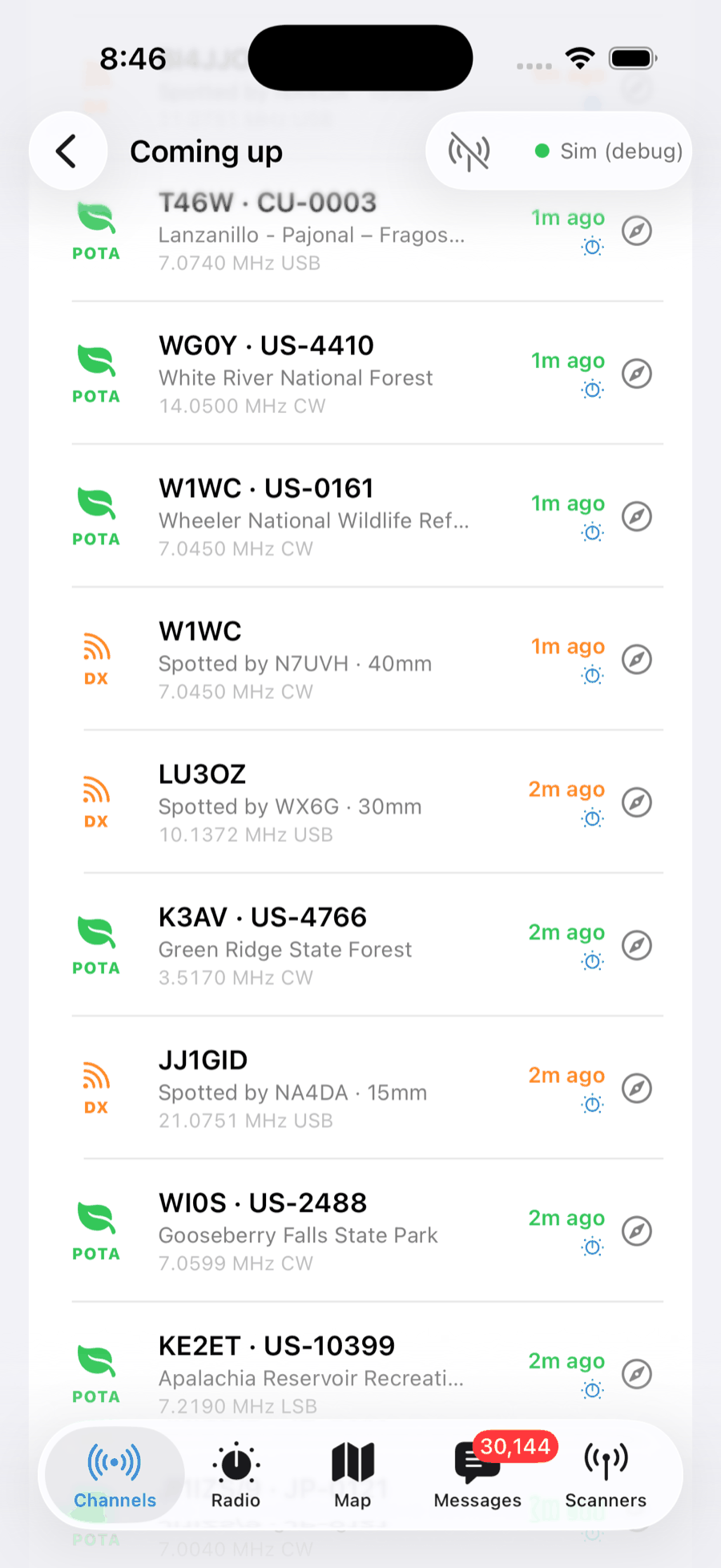
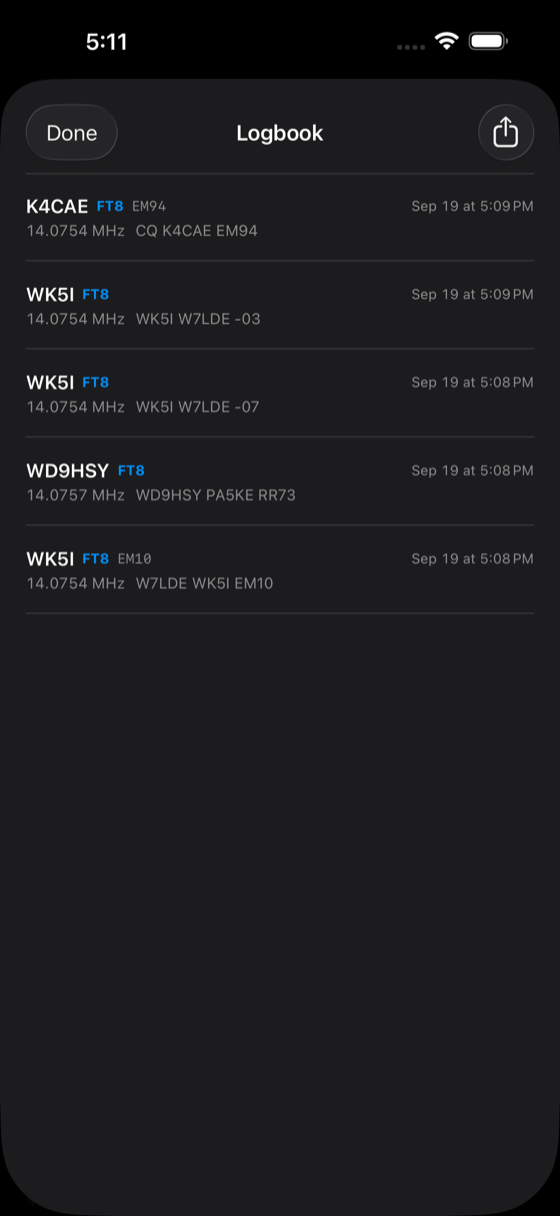
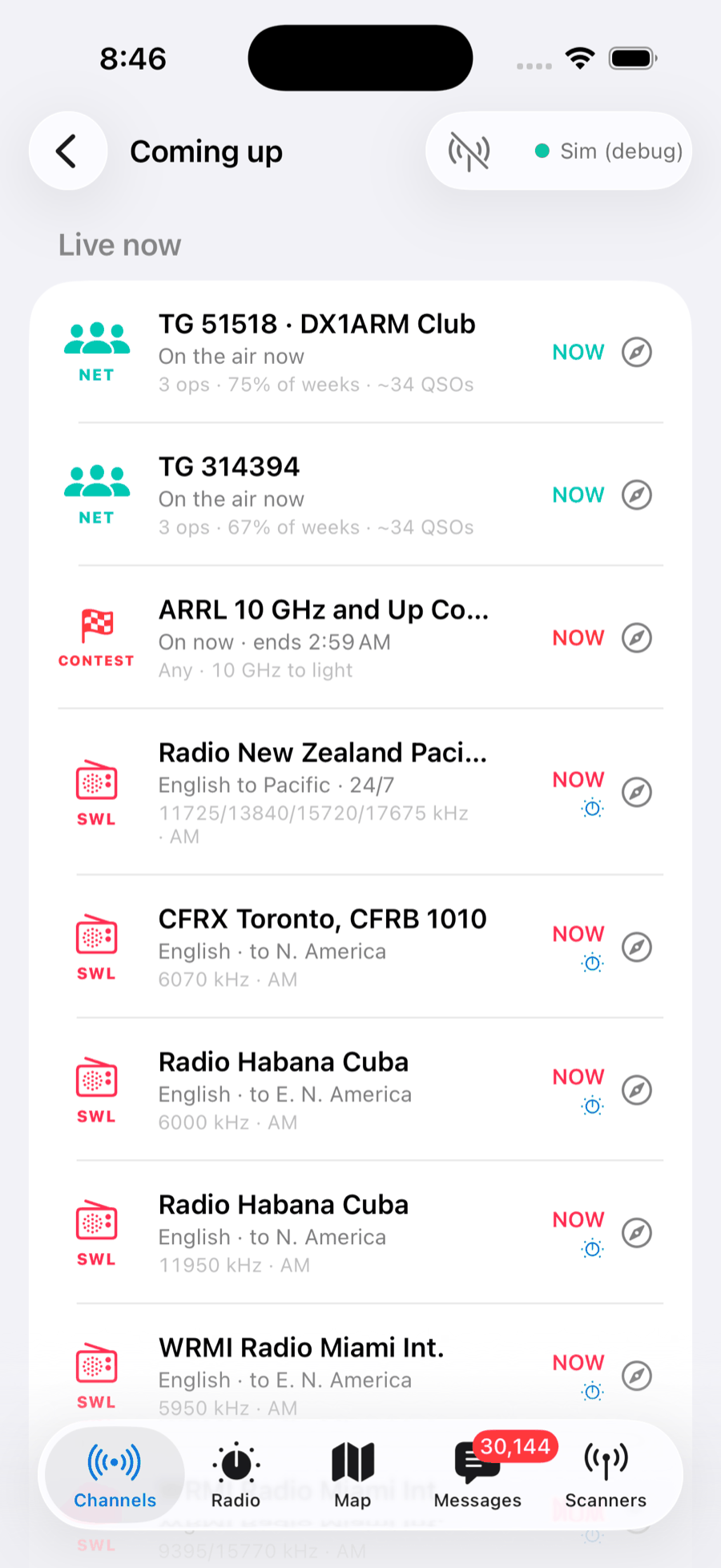
The DX cluster, your logbook and the contest calendar all live in the app, so the interesting stuff comes to you instead of you hunting for it.

  • DX Spots feed — live cluster spots by callsign, tap to tune, colored by SNR and workability.
  • Tap-to-log + ADIF export — log a heard station and export an SWL-flagged ADIF for your logging program.
  • Contests & activations — the contest calendar plus live POTA/SOTA spots, folded into the agenda with a link to the rules.
Slow-scan TV

Pictures out of the static

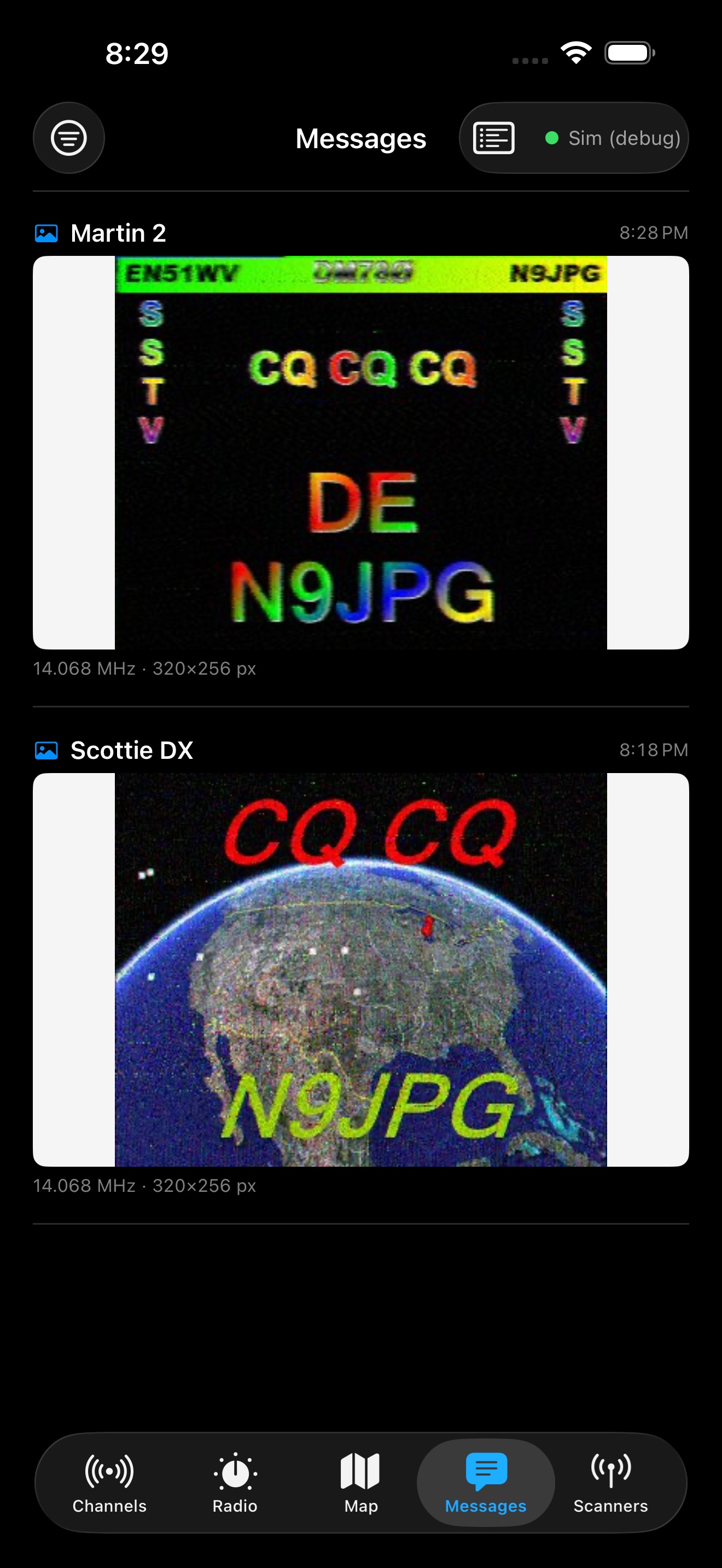
HF isn't only voice and data. Tune a slow-scan signal and watch the picture paint in line by line, then keep the good ones.

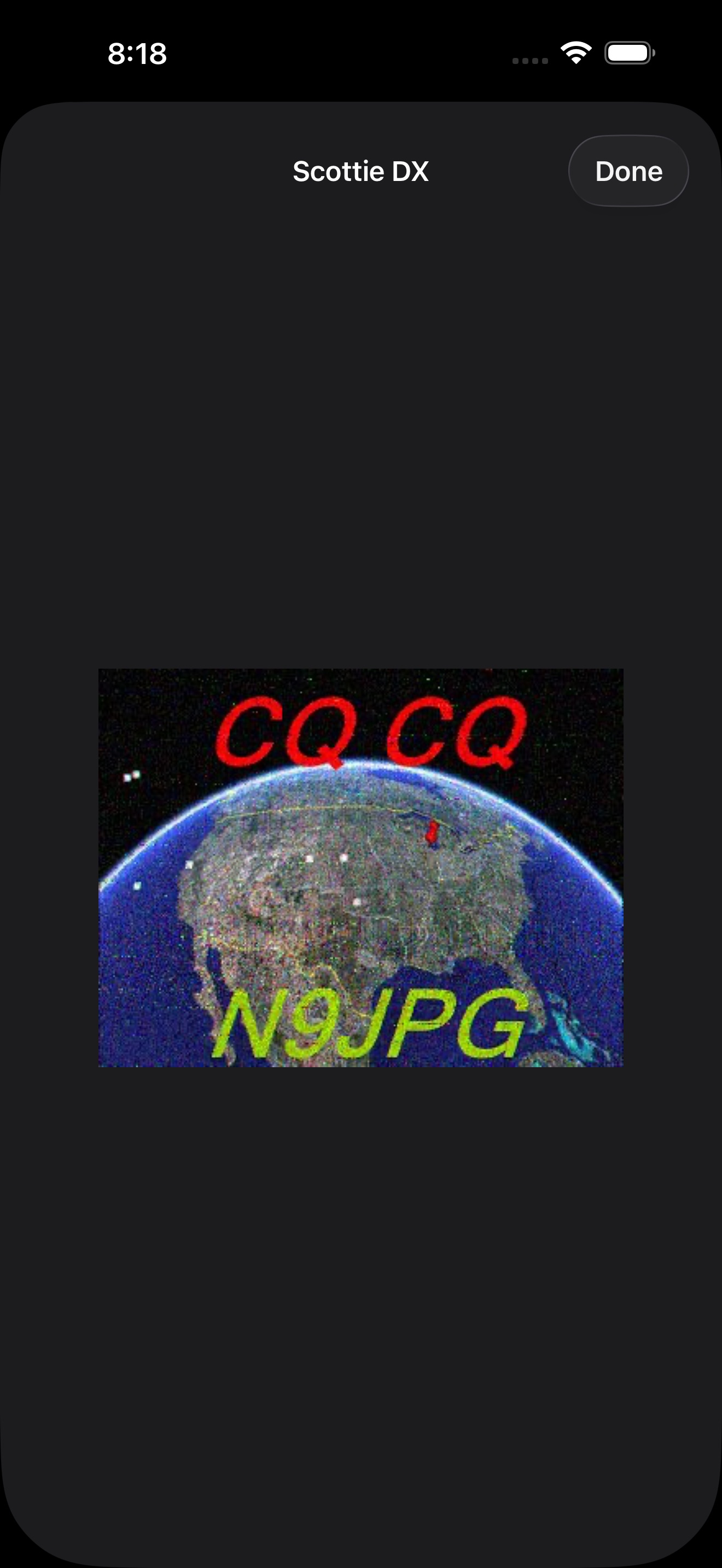
  • SSTV — Robot, Martin and Scottie modes decoded as they paint.
  • Live, line by line — the image builds in the feed in real time as each scan line arrives.
  • Straight to Photos — finished images save to your camera roll.

Map overlays for HF

Turn on Maidenhead grid squares, the grayline terminator, a live MUF contour and a repeater layer — so a WSPR spot or an FT8 grid means something at a glance.

Get on the air

A weak-signal HF station in your pocket

Add an RTL-SDR and an upconverter (or a native-HF SDR), point the app at the low bands, and let the decoders and propagation do the hunting.